PleinAirPainting
Plein Air Painting in Winter: Essential Tips and Gear for UK Artists
A practical UK guide to plein air painting in winter: layers, medium advice, hand care, a limited palette and simple kit to keep you painting in cold, damp weather.

Key takeaways
- • Winter light is diffuse and stable, offering longer workable scenes and clear tonal structure.
- • Dress in three layers with merino base, insulating mid layer and windproof outer; protect hands, feet and head.
- • Oil paint thickens and dries slower; use alkyds and keep tubes warm. Watercolour is workable above 4–5°C; avoid acrylics below 10°C.
- • Work small and fast: 15x20 to 20x25cm is ideal for 60–90 minute sessions. Use a limited palette to reduce decisions.
- • Carry hand warmers, a windbreak or shelter, underfoot insulation and wet protection such as an umbrella or pochade box.
Plein air painting in winter gets a bad reputation it doesn't deserve. The days are short, the skies are grey, and yes, you'll need an extra layer or two, but the British winter offers something genuinely different to any other season outdoors. If you've been painting outside through the warmer months and wondering whether to carry on, the honest answer is: carry on. This guide covers everything you need to do it well, dressed for the actual British winter rather than some imagined snowbound wilderness.
Why Winter Is Worth Painting Outside
The assumption that winter means stopping is understandable, but it's worth examining. The conditions that feel like obstacles often turn out to be the point.
The light is different, not worse
UK winter light is diffuse, soft, and remarkably consistent. On an overcast January morning, the scene in front of you will look almost identical at 10am as it does at midday. Compare that to a July session where the shadows shift every twenty minutes and the golden hour disappears before you've mixed your first colour. The stable light of a grey winter day gives you more time to look, think, and paint without chasing a moving target. When snow does appear, it simplifies the value structure beautifully: everything becomes about tone, and the painting almost composes itself. Bare deciduous trees reveal their underlying structure in a way that's genuinely useful, particularly if you're still building confidence with composition.
Fewer crowds, more solitude
Popular spots that are heaving in summer become yours in winter. The harbour at Bosham, the churchyard in Lavenham, the viewpoint above the Wye Valley: these places take on a different quality when the visitors have gone. There's more stillness, more focus, and a mood that's worth painting for its own sake.
Dressing for a UK Winter Painting Session
This is the section that makes or breaks a winter painting session. Get the clothing wrong and you'll be packing up within forty minutes. Get it right and you can work comfortably for an hour and a half without thinking about the cold at all.
The key thing to understand about a UK winter is that it's rarely extreme. Lowland England typically sees temperatures between 2°C and 8°C. Scotland can drop to -5°C or colder, and wind chill anywhere in the country can make it feel significantly sharper than the thermometer suggests. Damp is often more of a problem than raw cold. You're not preparing for an Arctic expedition; you're preparing to stand still in a cold field for ninety minutes, which requires a different approach to dressing than going for a winter walk.
The layering principle
Three layers, each with a distinct job.
The base layer manages moisture. Merino wool is the best option: it wicks sweat away from the skin and insulates even when damp. Avoid cotton entirely as a base layer. It absorbs moisture and holds it against your skin, which chills you rapidly when you stop moving. A merino wool long-sleeve top is the single best investment you can make in your winter painting comfort.
The mid-layer provides insulation. A fleece or down gilet works well. Down is warmer for its weight; a fleece is cheaper and dries faster if it gets wet. Either is fine for most UK conditions.
The outer layer blocks wind and moisture. A windproof and waterproof shell jacket is essential. It doesn't need to be heavy, it just needs to stop the wind from cutting through your insulation. Softshell jackets work well and allow reasonable arm movement for painting.
Your hands and feet
Hands are the critical weak point for any painter in the cold. Thin gloves alone won't do it. The solution that works is a pair of fingerless gloves worn underneath a mitten that folds back when you need your fingers. Keep chemical hand warmers in your coat pockets and press your hands against them between colour mixes. Rechargeable electric hand warmers are a better long-term investment if you paint outdoors regularly. Both are easy to find at Decathlon UK or Cotswold Outdoor.
If your hands lose dexterity to the point where you can't hold a brush properly, that's the signal to pack up. Cold hands aren't just uncomfortable; they're a sign your body is struggling to maintain temperature, and it's always the right call to head for warmth.
For feet: wool socks, waterproof boots, and insulated insoles if you feel the cold through the ground. A piece of foam mat or a folded carpet offcut under your feet adds meaningful insulation if you're standing on cold or wet ground for a long session.
Cover your head and ears. A hat that pulls down over the ears, combined with a neck gaiter or scarf, closes off the gaps that wind finds quickly.
How Cold Affects Your Materials
This is where a lot of general advice falls short for UK painters, particularly when it's written for US conditions or focused entirely on oil paint. Here's what actually happens to each medium in British winter conditions.
Oil paint in cold weather
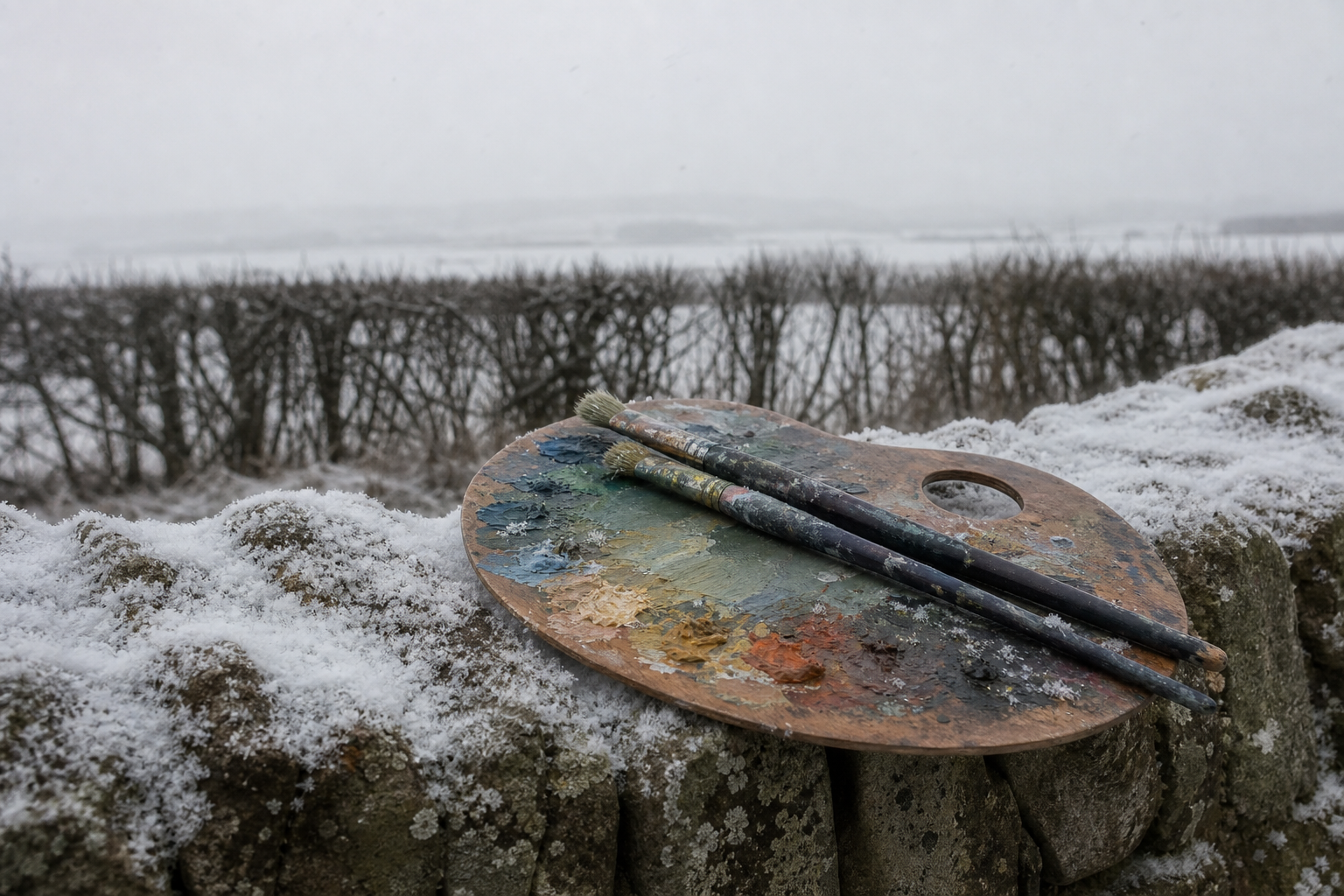
Cold thickens oil paint noticeably. Tubes left in a cold car boot overnight can become frustratingly stiff by the time you open them the next morning. The fix is simple: bring your paints indoors the night before and let them return to room temperature. During a session, keep your tube colours in an inner jacket pocket so your body heat maintains them at a workable temperature.
Linseed oil becomes more viscous in the cold as well. If you use a medium, alkyd-based options such as Liquin Original from Winsor and Newton behave significantly better in low temperatures than straight linseed oil. Stand oil is another reasonable choice. Avoid water-mixable oils if temperatures drop near or below freezing: the water component can freeze on the palette, which creates obvious problems.
Drying times slow considerably in cold weather, sometimes dramatically. Don't stack paintings or put them in a carrier until they're thoroughly dry; what feels touch-dry in the cold may still be soft once you're back in a warm room. For more on handling oils outdoors, see our plein air oil painting techniques covering ten essential tips.
Watercolour in winter
Watercolour is perfectly manageable in most UK lowland winter conditions, but it comes with specific risks as temperatures drop. Water in your palette and in your washes can freeze. Below around 4°C to 5°C, you're working against the medium rather than with it. Above that, it's manageable with a few adjustments: use less water overall, work a little faster, and be aware that granulation increases in the cold. That granulation can produce beautiful textural effects, but it's worth knowing it's happening rather than being surprised by it.
A practical workaround used by experienced outdoor watercolourists is to add a small amount of glycerine to your water. This lowers the freezing point slightly and keeps washes workable in marginal temperatures. It won't save you in a genuine frost, but for a cold and damp November day in the Dales it makes a real difference.
Acrylics: the temperature warning
This one is important. Acrylic paint should not be used below approximately 10°C. Below this threshold, the acrylic binder does not film-form correctly, which means the paint may not cure properly and the resulting layer can be brittle or unstable. Many painters who work in acrylics through the rest of the year switch to oils for winter outdoor work specifically for this reason. If you want to continue with acrylics, restrict yourself to sheltered spots and milder days, and keep a thermometer in your kit so you're not guessing.
Working in the cold
Cold thickens oil paint on the palette. Take your paints inside the night before and let them warm up at room temperature. This alone makes a significant difference to how easily they move.
Adjusting Your Painting Approach for Winter
Changing the conditions you're working in asks for some corresponding changes in how you work. A few practical adjustments make winter sessions consistently more successful.
Go smaller and work faster
Arrive with a small format and a clear intention. Somewhere between 15x20cm and 20x25cm (roughly 6x8 to 8x10 inches) is ideal for a winter session. It's achievable in sixty to ninety minutes, which is a realistic session length when you're working in the cold. Larger formats encourage you to linger, and lingering when the temperature drops is a problem. A completed small painting is worth far more than an unfinished larger one you had to abandon.
Aim to finish before 3pm in December and January. Usable painting light in the UK during mid-winter is roughly 9am to 3pm at best, and in many parts of the country, particularly further north, even that's optimistic. Check your sunset time before you leave; it will focus your session productively.
Embrace the limited palette
Fewer colours mean fewer decisions and less time fumbling with tubes in cold gloves. A limited palette of four or five colours is genuinely sufficient for winter painting, and it suits the muted, tonal quality of winter scenes well. A Zorn-style palette built around titanium white, yellow ochre, burnt sienna, and ivory black captures the warmth and quiet neutrality of winter light with surprising range. Add ultramarine blue if you're painting winter skies or want cooler shadows. If you want to go deeper into mixing strategy, our guide on how to mix colours outdoors is worth a look.
| Colour | Why it works in winter |
|---|---|
| Titanium White | Essential for cool atmospheric tones |
| Yellow Ochre | Warm, muted; suits low winter light |
| Burnt Sienna | Earthy warmth for bare trees and soil |
| Ultramarine Blue | Skies and shadows |
| Ivory Black | Optional; replaces a dark blue on a Zorn-style limited palette |
Work with the diffuse light rather than chasing it. On a grey winter day, the light is doing you a favour by staying consistent. Use that stability to look longer and commit more confidently before you mix.
Essential Winter Gear for Outdoor Painting in the UK
The gear that helps in winter is mostly about managing cold and moisture. Keep the list short and practical.
Keeping warm on the spot
Hand warmers belong in your kit permanently from October through to March. Air-activated disposable warmers (HotHands are widely available) are reliable and cheap. Rechargeable electric versions last longer and generate more sustained heat; they're worth buying if you paint outside regularly. Keep one in each coat pocket and press your hands against them between colours.
Positioning matters as much as clothing. If there's a hedge, a wall, or a treeline behind you, put it there. A natural windbreak reduces the effective cold significantly and makes a session noticeably more comfortable. If you're in an exposed spot, a small pop-up windbreak designed for beach use can be worth carrying.
Fighting the cold underfoot
Standing on cold, damp ground draws heat out of your body faster than cold air. A folded square of carpet offcut or a closed-cell foam mat under your feet makes a real difference on long sessions. It sounds unglamorous, but it works.
Protecting your work from moisture
In the UK, winter is more often damp than frozen. Drizzle and mist are more likely than snow, and both can damage a wet painting. A small umbrella that clips to your easel is a practical solution on uncertain days. A pochade box with an integrated lid is particularly useful in wet weather: you can close it quickly if the rain arrives unexpectedly and your painting is protected immediately.
On the way home, carry a purpose-made wet panel carrier or a plastic bag that can be folded around the canvas without touching the surface. One thing worth knowing: a cold canvas brought into a warm room can attract condensation. Allow it to warm gradually rather than putting it straight into a carrier.
Low light and short days
A head torch in your kit bag is small, light, and occasionally very useful for packing up in fading light. In December, it gets dark faster than you expect when you're absorbed in a painting. Check sunrise and sunset times before every session. Arriving before 10am gives you the best chance of making the most of the usable hours.
For paints and materials, Jackson's Art and Ken Bromley both have excellent UK stock and reliable delivery. Cass Art is useful if you're based near one of their stores and need something quickly.
Where and When to Paint in Winter
Choosing the right location in winter makes the difference between a session that works and one that falls apart.
Making the most of short daylight hours
Urban locations are worth taking more seriously in winter than at other times of year. Town parks, harbours, churchyards, and canal towpaths offer a combination of shelter, easy access to a warm café if things go wrong, and genuinely interesting subject matter. The bare bones of a market town or a small harbour in grey winter light can be as compelling as any pastoral scene, and you're protected from the worst of the wind.
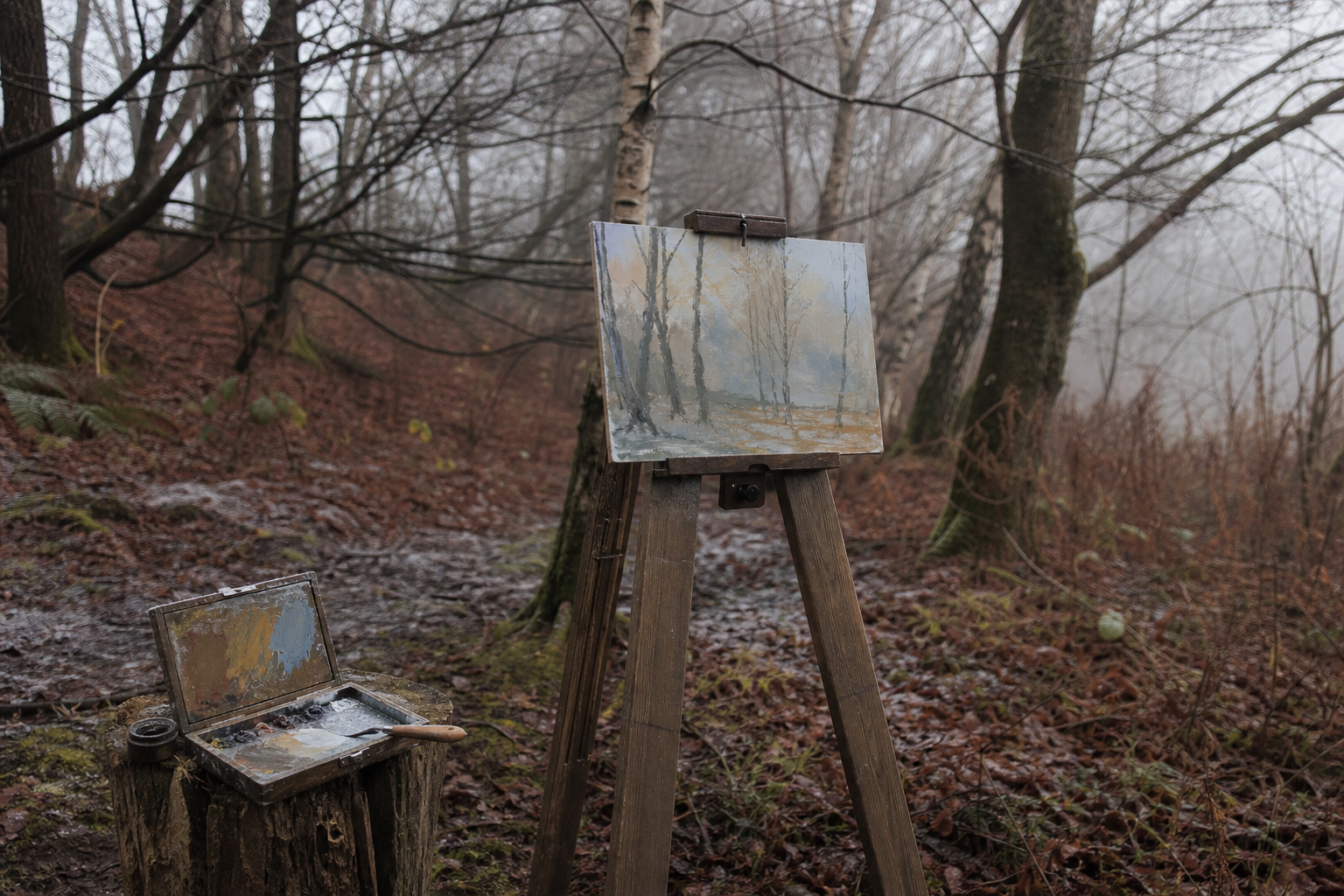
Woodland is excellent in winter. Bare trees reveal the compositional structure that foliage conceals, and the canopy still provides some shelter from rain and wind. The light filtering through bare branches on a misty morning is one of the quieter pleasures of winter painting.
Coastal locations in winter offer dramatic light and extraordinary atmosphere on clear days, but they're exposed. The Suffolk coast, the Northumberland shore, and the Pembrokeshire cliffs can be remarkable in winter conditions. Save coastal sessions for days with low wind and reasonable visibility, wrap up thoroughly, and know your route back before the light goes.
Avoid remote moorland or high ground unless conditions are stable and you have relevant outdoor experience. UK mountains and moorland can change rapidly in winter, and a painting session is not the context for being caught out.
Most public footpaths and open access land remain fully accessible year-round under the Countryside and Rights of Way Act 2000 in England and Wales, and the Land Reform (Scotland) Act 2003 in Scotland. There are no seasonal restrictions on painting outdoors on foot.
Indoor-adjacent options for wet days
On days that are genuinely too wet to work outside, positioning yourself just inside a doorway, under a deep porch, or beneath a covered market gives you a sheltered view of the outdoors without the exposure. It's a compromise, but it keeps the habit alive and the eye active on days when full outdoor working isn't practical.
A Few Final Thoughts on Winter Painting
The painter who goes out in January, even once, almost always goes again. There's something about working in the stillness of a cold morning, with the landscape stripped back and the light low and honest, that produces paintings with a quality you can't manufacture in better conditions. Winter asks you to focus, to simplify, and to commit quickly, and those constraints tend to produce stronger work. The same disciplined approach underpins alla prima plein air work in any season.
Don't wait for a perfect day. The imperfect British winter day, grey and damp and a little bleak, is often the one that makes the most interesting painting. Take the warm layers, keep the palette simple, and go out before you've had time to talk yourself out of it. The cold is manageable. The light is worth it.
FAQ
Frequently Asked Questions
Is it safe to paint outdoors in a UK winter?
Yes, with preparation. Choose sheltered or accessible locations, dress in layers, monitor your hands for loss of dexterity, avoid exposed high ground in bad weather and head for warmth if you feel dangerously cold.
How should I dress for a winter plein air session?
Use three layers: a merino base layer, an insulating mid layer (fleece or down gilet) and a windproof waterproof outer. Protect hands with fingerless gloves plus a fold-back mitten, wear wool socks and insulated boots, and cover head and ears.
How do cold temperatures affect different paints?
Oil thickens and dries more slowly; keep tubes warm and consider alkyd mediums. Watercolour works above about 4 to 5°C with less water or a bit of glycerine. Acrylics should be avoided below about 10°C because they may not film-form correctly.
How can I keep my hands usable while painting?
Wear thin fingerless gloves under a mitten that can fold back, use disposable or rechargeable hand warmers in coat pockets, and press hands against warmers between mixes. If you lose brush control, it is time to pack up.
How do I protect wet paintings from winter moisture?
Use a small umbrella clipped to the easel or a pochade box with a lid. Carry a wet panel carrier or a plastic cover for the journey home and allow cold paintings to warm gradually to avoid condensation.
Author

PleinAirPainting Editorial Team
PleinAirPainting.co.uk helps artists paint outdoors with confidence through UK-focused guides, equipment advice, resources and plein air inspiration.